
“That’s one small step for a man. One giant leap for mankind.” These were the first words uttered by a human being on the surface of another celestial object. Everybody is familiar with the story of how Apollo 11 became the most famous human endeavour in space on the faithful day of July 20th, 1969. However, the events that led to this historic milestone are uncharted waters for most of us. Also, the nature of Space Travel has changed over the last few decades. This is my attempt in describing the origins of space travel, where we are right now, and what space travel promises for the human race.
Space Travel today is characterized by idealistic needs such as the need to find new habitats and co-operation between different nations. However, the beginnings of space travel are marked by rather dubious rationales for space travel. The USSR and USA were the first space-faring nations and the reason why they attempted space travel was painfully obvious: to show superiority. Moreover, proficiency in space technology would have given the USA or the USSR a vital edge, since ballistic missiles and other weapons of mass destruction are based on similar principles to that of launching rockets!
In the end, neither the USA nor the USSR could claim “victory” in their pursuits, simply because accolades were shared between the nations. The USSR was responsible for launching the first satellite into space, Sputnik 1, on the 4th of October, 1957. They were also responsible for the first manned spaceflight, that of Yuri Gagarin aboard Vostok 1 in 1961. However, the USA gained an upper hand with the course of the decade, and eventually put men on the moon before the Soviets. Besides the sacrosanct involvement of the USA and the USSR in manned missions, various unmanned probes trapesed through the inner Solar System. The Venera probes launched by the Soviets visited Mars. The Mariner probes by NASA visited all the planets of the inner Solar System.
Hostility and feeling of superiority was clearly present on both sides. The infamous John F. Kennedy speech clearly shows this, where he summed up his beliefs by ending his segment on why a journey to the moon was needed by saying, “it’s one we intend to win”.
Clearly, space travel did not have the best of starts. How did mindsets change? It has all got to do with the beauty of our planet. Before the “space race” between the Soviets and the Americans, nobody had seen the whole planet inside one frame, inside one picture. Nobody had set foot on another world. Nobody had gone above the upper atmosphere. All this changed in a matter of a few years. Pictures of the Earth as a fragile-looking, spherical, blue object in the sky got people thinking. Al Gore, the prominent naturalist has noted that the beginnings of the environmental movement coincide with this phase of history. The wonders that humankind saw and felt through the astronauts and cosmonauts coupled with efforts to reduce hostilities between the USSR and the USA led to an evolution of mindsets. This evolution was further strengthened by the collapse of the Soviet Union and the end of the cold war.
Thus, we have seen a change in what we perceive as the intrinsic need for space travel. Instead of portraying one’s nation as the best, space travel has become more about our existence. Today, the scientific community is at a consensus: climate change and population growth will render the Earth uninhabitable soon. In order to ensure the continued existence of humankind, humanity must become a space-faring civilization. Some might argue that space travel is expensive and dangerous, and it would be much more prudent to look for technologies to “fix” the Earth and continue our survival here. However, there are far graver threats. Asteroids are known to impact the Earth, which causes unparalleled levels of destruction and extinction, as evidenced by the extinction of the dinosaurs, which scientists believe was caused by an asteroid/comet smashing into the Yucatan Peninsula. Thinking on much longer timelines, due to the natural stellar evolution of the Sun, temperatures on the Earth will rise as a consequence of the Sun’s bloated size. Moreover, putting in money on space technology results in remarkable inventions and innovations, which have applications in other fields. Thus, it makes sense to travel to and colonize other worlds.
So, what has happened in the field of space travel since the early 70s? Well quite a lot actually. We have developed stations in space in order to investigate the short-term, as well as long term effects of zero gravity. We have visited all the planets in our Solar System, though only through our unmanned space probes, of course. We have peered back in space and time with the help of our space telescopes. A partly re-usable spacecraft was used by NASA from 1981 until quite recently, called the space shuttle. Heck, we even landed spacecraft on objects thousands of times farther away from the Earth than the Moon is!
However, progress in space travel has stagnated. We have not built up from our expeditions to the Moon. It was expected then that manned travel to Mars would soon be feasible. However, that has not happened. In hindsight, one might blame lack of political will, lack of funding, and lack of international cooperation as the reasons why we have not yet landed on Mars. But, the past is past. We must learn from our mistakes and move on. Currently, our best estimates indicate we might put people on the red planet by 2030. NASA, in collaboration with other companies are trying to get men on Mars. Buzz Aldrin, the second man to land on the Moon, plays an active role in this. Moreover, private companies such as SpaceX are also planning to reach Mars, possibly even sooner than NASA! After landing on Mars, it is our aim to colonize Mars and then move on to the outer reaches of the Solar System and beyond.
This is the basic synopsis of Space Travel. We can look forward to many more achievements in space within the next few years. In fact, new revelations such as “Space Tourism” are gaining prominence. With it, space travel is increasingly coming closer to civilians. Mark my words, there will be a day, when daily space travel will feel as routine as a bus ride.
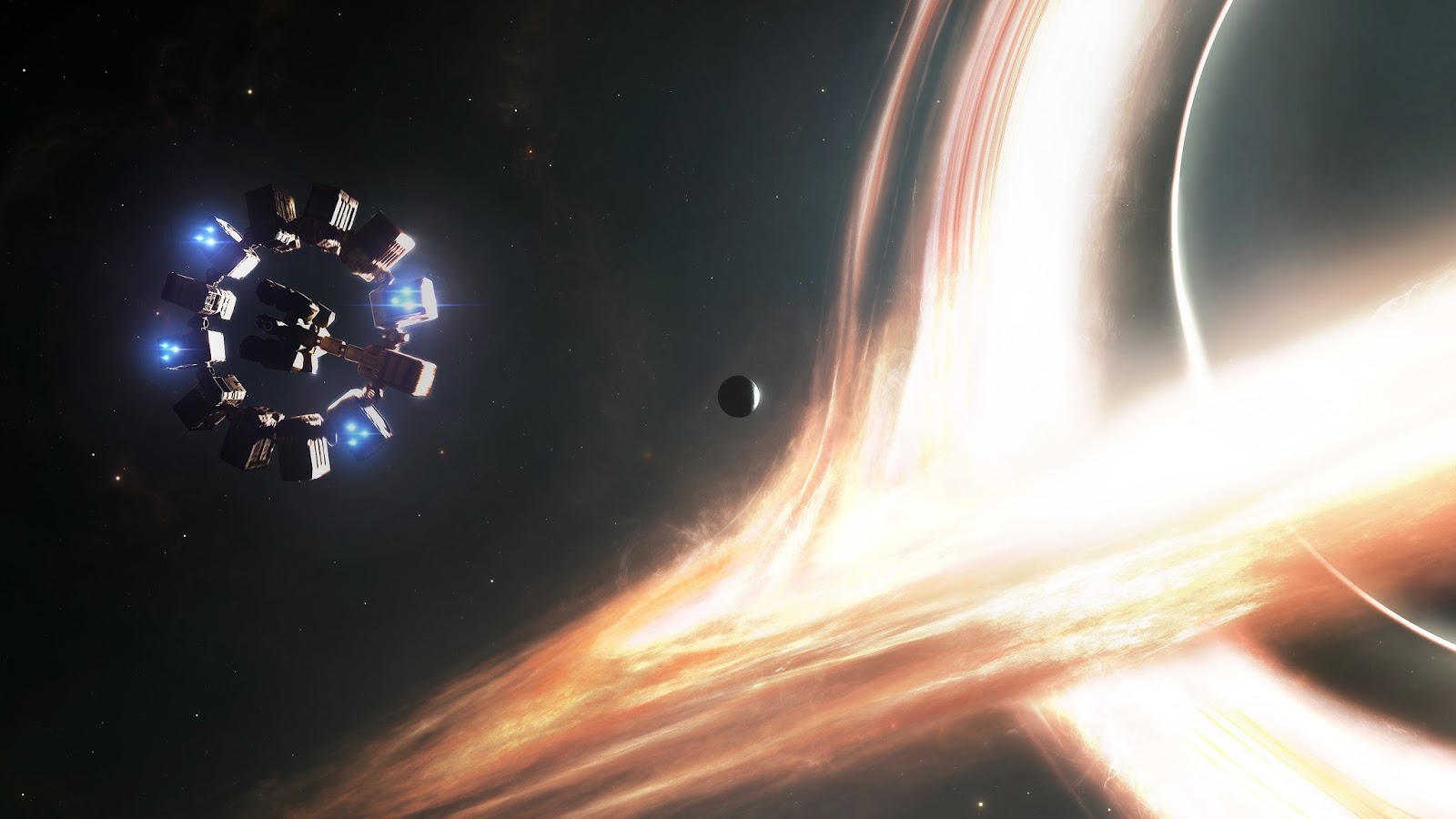 |
| When will spacecraft such as those in Interstellar be developed? Time will tell. |

 Bijaya's creations