
January 19, 2006. Cape Canaveral, Florida. An Atlas V rocket was perched on the launch pad, ready for launch. It was carrying with it a small probe, which was christened, New Horizons. It contained the ashes of Clyde Tombaugh, one of the pioneers of Space Exploration. It was he who discovered Pluto. Tiny and far-out, Pluto remained a mystery. That is, until after several delays and cancellations, New Horizons was finally scheduled to be launch on that faithful day.
It was decided that the most powerful rocket in the world would be used to fuel a launch that would take the probe to the outer reaches of our Solar System. And so it was launched:

A rendevous with the Jovian system was beckoning at the start of 2007. New Horizons was provided with the perfect opportunity to flex its scientific muscle on the way to Pluto. It returned some flawless images of the giant planet, and contributed to some research about its Magnetosphere, some of its moon, its rings, and some of the turbulent activity going on in the Jovian atmosphere.
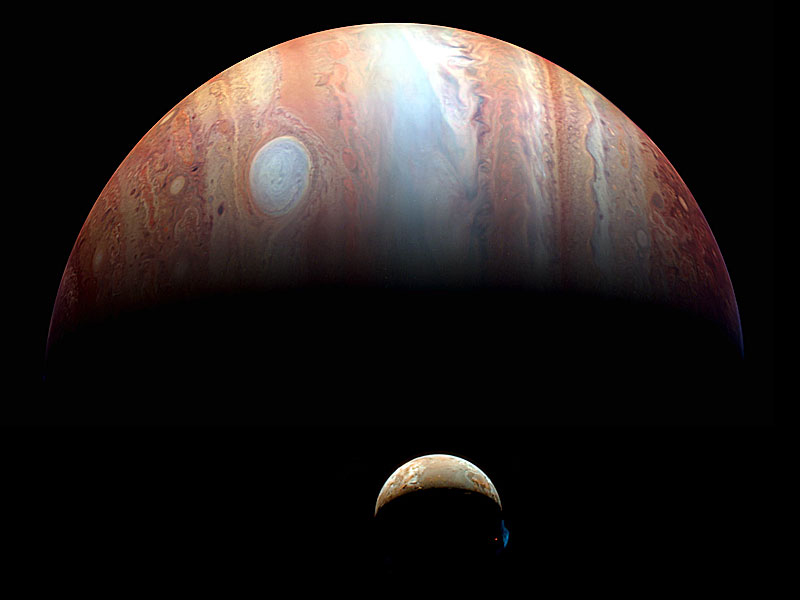
After that, New Horizons went in hibernation. It used to periodically send signals, assuring it was on course. However, there were some routine checks of the instruments as well. This went on for 7 years. It was re-awoken from hibernation in December of 2014 and since then, has been taking pictures of the Plutonian system and enhancing our understanding of the mysterious little dwarf planet that has always remained in our hearts.


 Bijaya's creations